

Dental Implants in Riverside, CA
Missing teeth can affect more than just your smile. They can impact your confidence, your ability to chew comfortably, and even your long-term oral health. At Orangecrest Family Dental, we offer advanced dental implant solutions that restore both the appearance and function of natural teeth. Dental implants are widely considered the gold standard for tooth replacement because they replace the entire tooth structure—from the root to the visible crown. The result is a restoration that looks, feels, and functions just like a natural tooth. If you are missing one tooth or multiple teeth, dental implants can provide a long-lasting, natural-looking solution that restores your smile and protects your oral health.
Stronger Bite, Brighter Smile
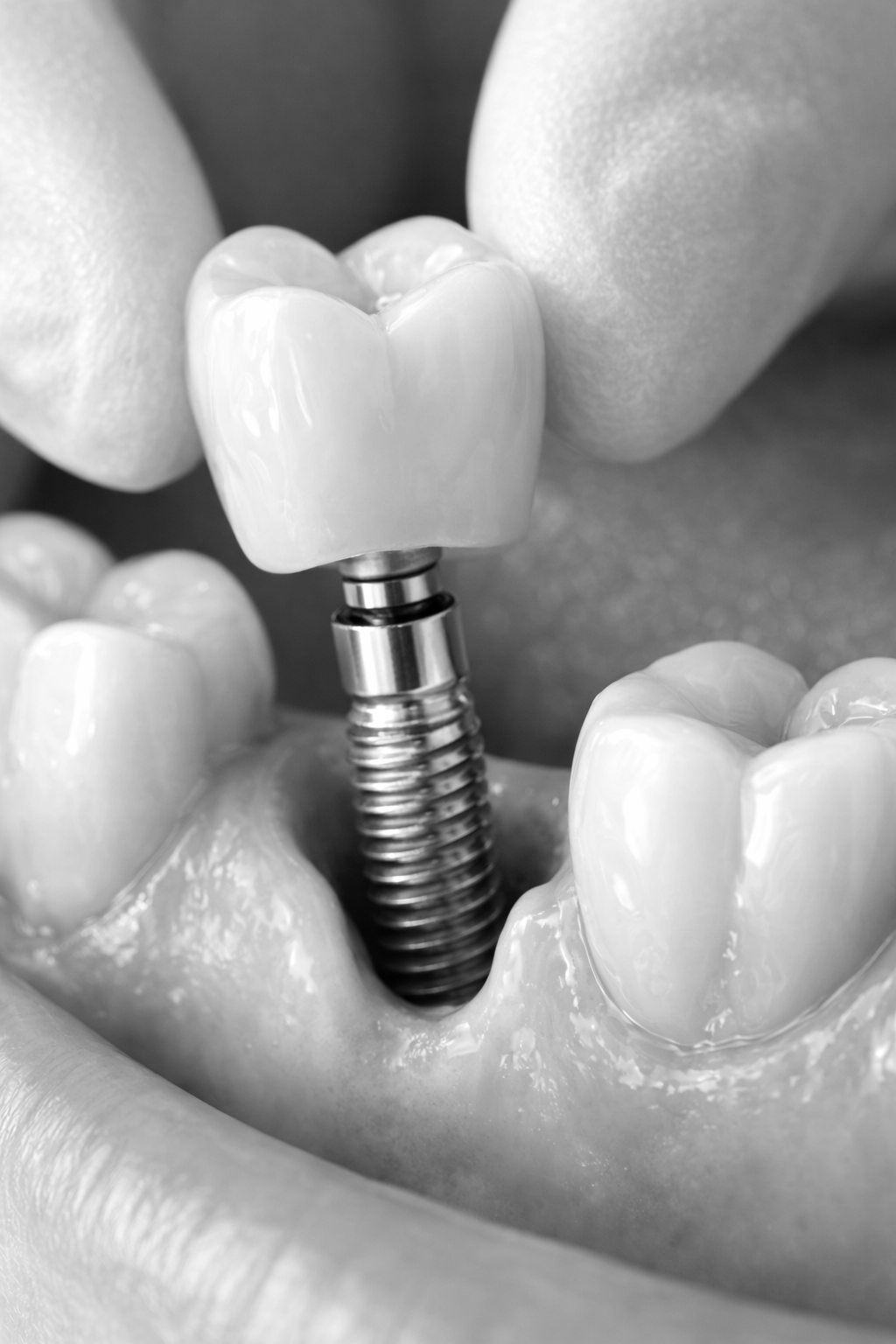
What Are Dental Implants?
Dental implants are small titanium posts that are surgically placed into the jawbone to act as artificial tooth roots.
Once the implant integrates with the bone through a process called osseointegration, a custom dental crown, bridge, or denture is attached to complete the restoration. Because implants are anchored into the jawbone, they provide a stable and permanent foundation for replacement teeth.
Dental implants are commonly used to replace:
• A single missing tooth
• Multiple missing teeth
• An entire arch of missing teeth
• Loose or uncomfortable dentures
Unlike removable options, implants are designed to function like natural teeth and provide long-term stability.
Benefits of Dental Implants
Dental implants offer many advantages compared to traditional tooth replacement options.
Natural Look and Feel
Implants are designed to look and function just like natural teeth, blending seamlessly with your smile.
Long-Term Durability
With proper care, dental implants can last decades or even a lifetime.
Improved Chewing Ability
Because implants are anchored into the jawbone, they allow you to eat comfortably without worrying about movement or slipping.
Prevents Bone Loss
When a tooth is missing, the surrounding bone can begin to deteriorate. Dental implants stimulate the jawbone and help maintain bone structure.
No Impact on Neighboring Teeth
Unlike traditional bridges, implants do not require the reduction of healthy adjacent teeth.
Improved Confidence
Patients often feel more confident speaking, eating, and smiling with dental implants.
Types of Dental Implant Restorations
Dental implants can be customized to replace different numbers of missing teeth.
Single Tooth Implant
A single implant supports a custom crown to replace one missing tooth.
Implant-Supported Bridge
Used when multiple teeth are missing in a row. Implants support a bridge rather than relying on natural teeth.
Implant-Supported Dentures
For patients missing many or all teeth, implants can stabilize a denture to prevent slipping and improve comfort.
During your consultation at Orangecrest Family Dental, we will recommend the best treatment option for your individual needs.
The Dental Implant Process
Dental implant treatment typically occurs in several stages to ensure long-term success.
Initial Consultation
Your dentist evaluates your oral health, reviews medical history, and may take digital X-rays or 3D imaging to assess bone structure.
Implant Placement
The implant is carefully placed into the jawbone. Over the next few months, the implant integrates with the bone.
Healing and Integration
During the healing phase, the implant becomes securely fused with the jawbone.
Final Restoration
Once healing is complete, a custom crown, bridge, or denture is attached to restore the appearance and function of the tooth.
Our team ensures each step is completed with precision, comfort, and careful planning.
Are You a Candidate for Dental Implants?
Many adults with missing teeth are good candidates for dental implants. Ideal candidates typically have:
• Healthy gums
• Adequate jawbone density
• Good overall health
• A commitment to good oral hygiene
Even if bone loss has occurred, procedures such as bone grafting may help prepare the jaw for implants.
How Long Do Dental Implants Last?
Dental implants are one of the most durable solutions in modern dentistry. With proper care and routine dental visits, implants can last many decades or even a lifetime.
The crown placed on top of the implant may need replacement over time due to normal wear, but the implant itself is designed to be permanent.
Caring for Dental Implants
Dental implants can be cared for much like natural teeth.
• Brush twice daily
• Floss regularly
• Visit your dentist for professional cleanings
• Avoid chewing hard objects like ice
• Wear a night guard if you grind your teeth
Maintaining good oral hygiene helps ensure the long-term success of your implant restoration.
Dental Implants in Riverside, CA
At Orangecrest Family Dental, we are dedicated to helping patients restore their smiles with modern dental implant technology. Our goal is to provide personalized treatment that improves both function and confidence.
Our team focuses on high-quality care, advanced technology, and comfortable treatment experiences for every patient.
Schedule Your Dental Implant Consultation
If you are missing one or more teeth and want a long-lasting solution, dental implants may be the ideal option for restoring your smile.
Contact Orangecrest Family Dental today to schedule your consultation and learn how dental implants can help you regain the function, beauty, and confidence of a complete smile.

Request a Free Implant Assessment.
Frequently Asked Questions
Are dental implants painful?
Most patients report minimal discomfort during the procedure. Local anesthesia is used, and many patients say implant placement feels similar to a tooth extraction.
How long does the dental implant process take?
The entire process typically takes three to six months, depending on healing time and individual treatment needs.
Do dental implants look natural?
Yes. Implant crowns are custom-designed to match the color, shape, and size of your natural teeth.
Are dental implants better than dentures?
Dental implants are more stable than traditional dentures and help preserve jawbone health, making them a preferred long-term solution for many patients.
How successful are dental implants?
Dental implants have a success rate of over 95%, making them one of the most reliable treatments in dentistry.
Can smokers get dental implants?
Smoking can affect healing and implant success, but many smokers can still receive implants with proper planning and care.
What happens if I don’t replace a missing tooth?
Missing teeth can lead to shifting teeth, bone loss, and bite problems over time. Dental implants help prevent these issues.